
"G5 coffee"
600 article(s) found

Introduction to the grades of coffee trees in Ethiopia
Grade of Ethiopian coffee: Ethiopian washed coffee Yega Chuefei G1 G2 Sidamo (Yirgacheffe, Sidamo) has the highest grades 2 and 3 (G2, G3), while sun-processed coffee in eastern Ethiopia is mostly grade 4 or 5 (G4, G5). In many cases, level 4 coffee is marked as level 5 in order to reduce taxes. At present, the classification is not uniform and there are
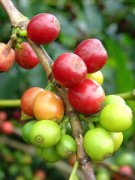
One of the ingredients of synthetic beans, Jinbi coffee, fine coffee.
Ghimbi grows in the plateau of Western Ethiopia at 4900-5900 feet (Wollega province) above sea level, north of Jima, mostly wild, with an annual output of about 500000bags/60kg, mostly exported by G5/G4, beans larger and longer than Longberry, brownish in green, similar to less jasmine tea, more bitter, lack of rising Hara, slightly sour, slightly fruity and slightly inferior to wine.
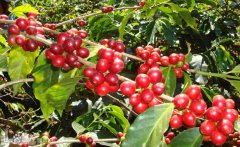
Kimby-Ethiopia Fine Coffee Beans
Ghimbi grows in the plateau of Wollega province, north of Jima, west Ethiopia, 4900-5900 feet above sea level. Its annual yield is about 500000bags/60kg. Its export is mostly G5/G4. Its bean body is bigger and longer than Longberry, with a little brown in green color. It tastes like less jasmine tea fragrance, more bitter, lacking rising hala, slightly sour, with slight fruit fragrance and wine fragrance.
Djimmah accounts for about 50% of Ethiopia's annual output (1000000bags/60kg).
Djimmah, which accounts for about 50 per cent of Ethiopia's annual output (1000000bags/60kg), grows between 4400 and 6000 feet above sea level in the southwestern highlands of the country (the border between Kaffa and Illubabor provinces) and is usually exported by G5/G4. However, in recent years, about 10% or 20% of Gima has been used to make up for the lack of taste of coffee, but its quality has gradually declined.

Gima is a little sour, but slightly inferior to Hara, with a medium texture and rugged earthy flavor.
Djimmah, which accounts for about 50 per cent of Ethiopia's annual output (1000000bags/60kg), grows between 4400 and 6000 feet above sea level in the southwestern highlands of the country (the border between Kaffa and Illubabor provinces) and is usually exported by G5/G4. However, in recent years, about 10% or 20% of Gima has been used to make up for the lack of taste of coffee, but its quality has gradually declined.

Mixed coffee made by hand in autumn | coffee beans made by hand [Ethiopian washing Cochel]
Professional coffee knowledge exchange more coffee bean information please follow the coffee workshop (Wechat official account cafe_style) autumn hand-mixed coffee | hand-made coffee beans [Ethiopian washing Kocher] brief introduction? What are the flavor characteristics? Cochel producing area is located in Yega Sheffield, Ethiopia. The grades of washed raw beans are G1 and G2, sun-dried raw beans, etc.

An introduction to the characteristics of boutique coffee in the manor area
The beans are small, neat and round. Ethiopian sun beans are generally G3--G5, but the beans are G2, equal to the grade of washed beans. Although there are still a few defective beans, they are commendable compared to the sun beans of Harald and Sidamo. The 2015 sun Yega snow caffeine has appeared in the G1 grade, surpassing the G1 washing in terms of quality and sales. This bean is baked

Description of the taste of Manning Sidamoye plus snow coffee beans
Manning Sidamoye Snow Coffee Coffee beans taste description Water washing: Grade-1;Grade-2 (G1G2) Sun: Grade-1 and Grade-3~Grade-5 (G1G3G4G5) A few notes: a) both washing and sun exposure, there is Gr-1, provided that there are zero defects and Premium Cup. Whether it's washing or tanning, Gr-1 is the best of the boutique or Cup of Excellence coffee.

Summary of coffee bean grade classification in various countries formulation and grade classification of coffee producing countries
In the Qianjie coffee factory, each batch of new beans received, there will be information about these beans, coffee producing country, altitude, manor, treatment, and the grading of coffee to be mentioned today, such as Kenya PB, Yega G1, so what does these grading letters mean? in fact, coffee grading standards vary from country to country and from region to region.

Sun Yega Snow Coffee Taste Sunshine Yega Snow Flavor
The beans are small, neat and round. Ethiopian sun beans are generally G3--G5, but the beans are G2, equal to the grade of washed beans. Although there are still a few defective beans, they are commendable compared to the sun beans of Harald and Sidamo. The 2015 sun Yega snow caffeine has appeared in the G1 grade, surpassing the G1 washing in terms of quality and sales. This bean is baked

Introduction to the Yega Coffee Cochel Shepherd Coffee Bean Flavor processing Manor in Ethiopia
The grade of Ethiopian coffee: Ethiopian washed coffee Yega Chefe G1 G2 Sidamo (Yirgacheffe, Sidamo) the highest grades are level 2 and 3 (G2, G3), while sun-processed coffee in eastern Ethiopia is mostly Grade 4 or Grade 5 (G4, G5). In many cases

Sun Yega Chefen Wauka characteristic Sun Yega Snow Coffee Wauka Flavor
The beans are small, neat and round. Ethiopian sun beans are generally G3--G5, but the beans are G2, equal to the grade of washed beans. Although there are still a few defective beans, they are commendable compared to the sun beans of Harald and Sidamo. The 2015 sun Yega snow caffeine has appeared in the G1 grade, surpassing the G1 washing in terms of quality and sales. This bean is baked
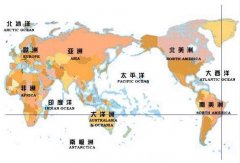
Sun treatment Yega Xuefei Grade China Coffee Trading Network
However, in the past two years, Yejia snow coffee is unusual, frequently launched amazing sun beans, and become a boutique market Deep-Fried Chicken! The beans are small, neat and round. Ethiopian sun beans are generally G3--G5, but this bean is G2 (I will open a new paste for Ethiopian coffee beans), which is equal to the grade of washed beans, although there are still a few.

A brief introduction to the producing area of Ethiopian coffee beans by taste and flavor description method
Brief introduction to the producing area of Ethiopian coffee beans grown on the plateau of 4900-5900 feet (Wollega province) above sea level in Western Ethiopia, north of Jima, most of them are wild, with an annual output of about 500000bags/60kg, and most of them are exported to G5/G4. The beans are larger and longer than Longberry, with a little brown in green, similar to the taste of jasmine tea, bitter, and lack of upsurge.

Introduction to the flavor and taste characteristics of Arabian coffee
Grades of Arabica coffee beans Ethiopian coffee: Ethiopian washed coffee Yega Chuefei G1 G2 Sidamo (Yirgacheffe, Sidamo) the highest grades are level 2 and 3 (G2, G3), while sun-processed coffee in eastern Ethiopia is mostly grade 4 or 5 (G4, G5). In many cases, level 4 coffee is marked as level 5 in order to reduce taxes. Now

Description of the Flavor of Coffee in Sidamo, Ethiopia
Description of the Flavor of Coffee in Sidamo, Ethiopia the grinding scale area grows on the plateau of 4900-5900 feet (Wollega province) above sea level in Western Ethiopia, north of Jima, mostly wild, with an annual output of about 500000bags/60kg, mostly exported to G5/G4, with beans larger and longer than Longberry, brownish in green, similar to jasmine tea in taste and more bitter.

The Origin of Coffee in the World an introduction to the coffee bean producing areas in Ethiopia
Ethiopia is the hometown of Arabica coffee, and it is in the forests of Kaffa that you can see wild Arabica coffee. In Ethiopian, coffee is called Bun or Buna, and coffee beans (coffeebean) may be translated from Kaffa Bun. Arabica coffee was discovered early in the Harar area and is likely to come.

The grade of Ethiopian coffee
Grade of Ethiopian coffee: Ethiopian washed coffee Yega Chuefei G1 G2 Sidamo (Yirgacheffe, Sidamo) has the highest grades 2 and 3 (G2, G3), while sun-processed coffee in eastern Ethiopia is mostly grade 4 or 5 (G4, G5). In many cases, level 4 coffee is marked as level 5 in order to reduce taxes. At present, the classification is not uniform and there are
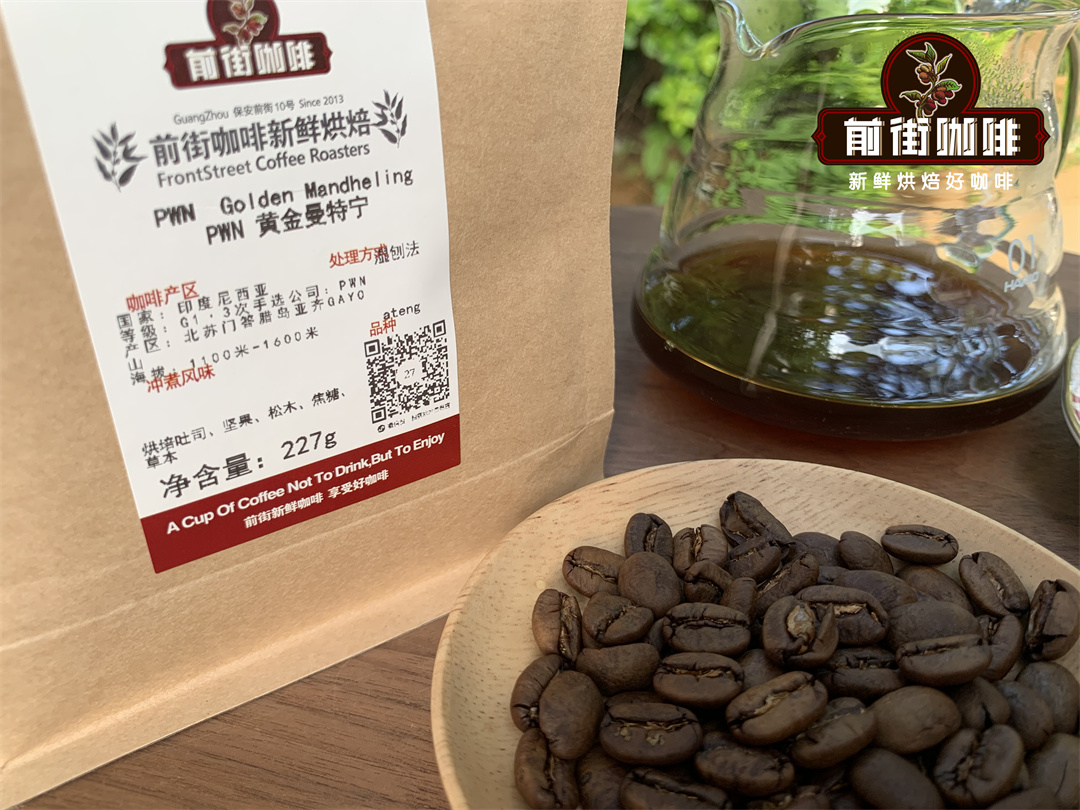
What are the types and grading criteria of Indonesia's Mantenin? how to distinguish between old manning and gold manning?
Indonesian coffee is mainly semi-washed, which is graded according to the proportion of defective beans and the number of defective beans selected by hand. There are five different grades from G1 to G5, with G1 being the highest. Under the grading system, Sumatra is divided into four different systems: Mantenin, Golden Manning, Lake Tawa Coffee,